(844) 533-7230
Welcome to LEDRADIANT, your LED lighting source
Shopping Cart - 0 Item

You have no items in your shopping cart.

Compare Products

You have no items to compare.

LEDRADIANT BLOG

  • LED Corn Bulbs are More Efficient than Incandescent Bulbs

    LED corn bulbs are much more efficient than Incandescent bulbs, compact fluorescent lamps (CFL) halogens, metal halide and HPS; Proving their efficiency in test after test, LED corn bulbs have certainly emerged as the cadillac of light bulbs. Using about 1/10 the power of an equivalent incandescent, these bulbs blow the competition away when it comes to efficiency and productivity.  Let’s start with the basics…those unfamiliar with LED lighting and its subsequent terminology, may ask the question: what exactly is a corn bulb? Simply put, a corn bulb is so named because of its shape and appearance. Very much resembling an ear of corn, the bulb itself is shaped like a cob if you will. Fitting into standard incandescent receptacles, the LED corn bulbs are rated for a lifespan of more than 50,000 hours, this means that if used 8 hours every single day they will last more than 17 years.  Thus, replacing old subpar bulbs with the latest in LED lighting technology is just about the best thing you can do for your home or business.
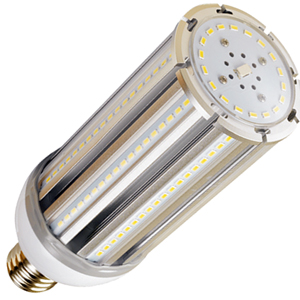
    corn bulb

    How do LED corn bulbs perform against CFL’s and Halogens…

    There really is no question of the supremacy of the LED corn bulb over both Halogens and CFL’s. Utilizing only about half the power of the CFL bulb, the LED corn bulb proves its superior performance time and time again. Capable of replacing a metal halide and HPS of nearly five times the wattage, the corn bulb is ideal for areas requiring a great deal of light (since this is a general article is better to link to the category page http://ledradiant.com/led-lights/led-corn-bulb ). And when it comes to a comparison with halogen bulbs, the LED corn bulb is the clear winner, boasting an efficiency rating that is 6 times better than the halogens.

    Is the LED corn bulb safe to use?

    Just about anywhere…In fact, this particular bulb is often prized for its “green” properties. For one, unlike a number of other such products in the lighting industry, the corn bulb does not emit mercury or any other noxious gases for that matter. Safer for the environment = safer for you. Additionally, CFL’s are infamous for the amount of heat that they generate and consequently give off. This can certainly cause damage and potentially, be dangerous. In comparison, LED corn bulbs emit almost no heat, creating a much safer and overall healthier atmosphere in the long run.

    When it comes to lighting technology, the LED corn bulb leads the pack. Safer, more efficient and greener, these bulbs are certainly worth investing in.
  • Great Savings and ROI when you replace old lighting technology with state of the art LED

    Yes, you will pay more for LED bulbs (perhaps three to five times more per bulb); not to mention a revamped lighting plan that calls for the removal of your “old school” system in favor of a more energy- conscious, longer lasting LED based plan is not necessarily cheap. However, looking at the big picture and the overall results, you are actually making a sound investment in your company and its future, as this new LED plan will give you extraordinary ROI--usually greater than 50% per year. People often ask us about LED payback. When will I see an ROI…one year, two years, five? In fact, considering the extreme efficacy and affordability of LED lighting, given a standard 8 hour day usage, payback is generally less than one year.  How much will I actually save if we replace the more traditional fluorescent lights with LED? Great question certainly, and LEDRadiant is deeply invested in all of your lighting needs. The future is LED, no doubt about it. And yet, it is understandable that there may be some concerns as to budget, costs and savings when implementing LED. That is why we are here to guide you every step of the way, hold your hand if need be, and walk you through this transition into the future of commercial lighting.


    So how do we save by replacing fluorescent lighting with LED?

    Longevity for one…Life span when speaking about bulbs is critical. Fluorescent (the previous go-to workplace bulb) tends to have an approximate 10,000 hour life span. LED’s  range from 50,000 to 70,000 hours. Given the incredible differential here, the fact that LED’s last 5 times longer makes them cheaper than fluorescents; not to mention, you also need to factor in manpower costs to constantly re-lamp the rather vapid CFL bulbs.

    Additionally, when paired with any type of sensor or control, the old standby fluorescent bulb panics; thus burning itself out a lot faster than the calm and collected highly dimmable LED (in fact most CFL’s don’t even have this dimming capacity). LED’s, developed much more recently than their fluorescent counterparts, know how to handle working with dimmers, timers, motion sensors, and so forth. Whilst fluorescent bulbs experienced their heyday when technology did not necessarily reign supreme—certainly not the case in 2016, and so they are insufficient when it comes to reaction time and ability to sustain. GE is even in the process of phasing out a segment of its fluorescent product line as it is simply not meeting the needs of current software and technology. The long of the short of it is…LED bulbs versus fluorescent in terms of lifespan = no contest

    And then there’s all of the technical stuff…Kwh, or kilowatts per hour directly relates to the amount of energy used. LED on average uses approximately 50-75% less kwh than CFL’s (CFL's life span in practice is less than 8,000 hours). Adding all of these factors together, it becomes quite simple: with LED bulbs you save money. On a monthly basis this equates to a huge cost reduction when you pit LED against fluorescent's. Break out your LED cost savings calculator and, in the end, you will discover that depending on the size of your operation and the scope of the new lighting plan implemented, your savings could be quite significant. Businesses have seen upwards of $100,000 per year savings when retrofitting their structures with a new LED based lighting system, with typical ROIs greater than 50%.

    LED_bulbs

    It’s a no-brainer really. LED is here to stay. The question isn’t when will I experience a payoff, but more like, when I can retire on that payoff... LEDRadiant is here to help. Showing you the most effective and efficient lighting solutions possible, we will ensure that you are absolutely thrilled with your choice of switching to an environmentally-friendly, budget conscious LED lighting plan.


  • 5 Things You Didn't Know About LED Lighting

    If you have an interest in LED lights, you probably already know their basic benefits.  By comparing them with other types of lighting, they consume much less electricity, last longer and are cooler to the touch. But the benefits of LED lightning don't end there.

    Here are five lesser known advantages of LED lights you probably didn’t know:

    LED Lights can take a hit!  All other light bulbs, by dropping them on the floor or hitting them with a hockey stick become useless and usually the result is shattered glass everywhere. But LED’s are different. They can take a hit and keep on ticking!  Since they are not made of glass, they are much more durable than traditional gas filled bulbs. Even if they are impacted or damaged, unless the damage is severe, they may be able to be repaired. Contact your supplier for details on reparable LED products.

    They won't leave you in the dark. Unlike traditional light bulbs, LEDs don't suddenly go dark. Instead, after their estimated lifetime, they begin to fade, slowly losing brightness, thus allowing you to schedule their replacement well before they completely fade out.

    They never Flicker. LEDs use Direct Current (DC) instead of Alternating Current (AC). most of LED bulbs include an internal electronic driver to convert AC power into DC, thus allowing for a constant non-flicker current.

    They come in different color temperatures. Do you prefer daylight to subtle yellow light? How about bright white with a bluish tint? The choice is yours when selecting LED lights. Paying close attention to lighting color is important as it can directly affect mood and alertness. Additionally the color plays an important aesthetic role in interior design. Make sure you pay close attention to color temperature when you are selecting an LED bulb. The Illumination experts at LEDRadiant can assist you in your search for the perfect LED bulb for your needs.

    They don't waste light. LED Chips are unidirectional and distributed in various locations on the bulb fixture. For ceiling lighting, this means that all the light is directed toward the open space and no light is directed towards the ceiling. These ceiling bulbs give a 180 degree sphere of light instead of the traditional 360 degree spheres that require a reflector.

    Visit LEDRadiant at http://LedRadiant.com

  • Why You Need to Upgrade to LED Lighting Now

    By now you've heard all of the hype about LED bulbs and all the benefits of using LEDs over traditional incandescent or HPS bulbs. For individuals in private homes, switching to LED lighting will help save money and electric. It also is good for the environment. This is the basic understanding of LED products as we have come to know. If you are like me, you are in the process of switching to LED, but you are waiting for your old incandescent or CFL bulbs to burn out. You spent money for those and don’t want them to go to the landfill before they are expired.

    factory-lights Energy efficient LED tube lights.

    However, for business and industry, the urgency is now. Replacing traditional bulbs with LED lights is an urgent and immediate requirement. Don't put this off any longer because each day you are spending more money than you should. You are wasting electric. Places that have lights on for more than 8 hours a day are doing themselves a very strong disservice by continuing to operate their old HPS, florescent, or even incandescent light fixtures.

    Think about making the switch now. The savings by switching to LED are immense and immediate. Each day you wait costs you more money. Some warehouses, department stores, municipalities and other areas that keep lights on more than 15 hours a day often report their payoff in ONLY ONE MONTH. If you are operating a grid of lights with multiple fixtures burning more than 5,000 watts of HPS, CFL (fluorescent) or Metal Halide, or incandescent, energy-savings of LED lighting will be remarkable.

    The cost of upgrading the bulbs now and throwing out those old bulbs will pay off in such a short amount of time that it does not make sense to continue wasting electricity with traditional bulbs. The amount of time it takes to see a return on the investment in new bulbs varies based on the number of hours of light you're using.

    Generally speaking, a facility with lights burning 24/7 will see a payoff within a few weeks. Once the lower electric bill pays for the cost of the LED bulbs and their installation, the ongoing savings in electric is momentous. Furthermore, the long lifespan of LED bulbs means you will not have to replace them for many years. Long Lasting LED's will last more than 50,000 hours, around 5.5 years if used 24 hours a day. This means that ONLY after 5.5 years of use you will start noticing a decrease on the brightness of the bulb.

    The amount of daily hours of lighting use is the most important aspect to determine the payoff time and the ROI.

    The analysis is quite simple. Calculate the lighting amount of your electric bill. Contact LEDRadiant for an estimate and we will provide you with a free site survey to show you how quickly you can realize ROI on new lighting.

    Our LED products are available in different color temperatures and styles. LEDRadiant has the proper style to replace your existing lights without the need to reconstruct or create new fixtures.

    All of LEDRadiant’s light products are guaranteed for five years, typically have a minimum of 50,000 hours of life, and are UL listed.

    For more information or to speak to an illumination adviser, call LEDRadiant toll free at (844) 533-7230.

  • LEDRadiant -- It's all About the Technology

    LEDRadiant is among the leaders in the forefront of LED technology. The single most important thing that separates LEDRadiant from other LED companies or big box department stores that sell LED lighting is technology. LEDRadiant does not maintain large quantities of stock so that all items available continue to maintain the latest in technology and highest efficiency available.

    What this means for the consumer is that LEDRadiant bulbs continually provide the highest lumens per watt ratio and last up to 4 times longer than department store LED bulbs.

    One of the best-selling department store bulbs is a 10 watt LED (60 watt replacement). This bulb is sold at numerous big box department stores and produces 800 lumens of light. In comparison, LEDRadiant’s newest 8 watt bulbs will replace a 100 watt incandescent bulb by producing 1040 lumens. In other words, LEDRadiant’s bulb uses 20 percent less electric and produces 30 percent more light. While it's true that simply replacing one bulb will not have a huge impact on electric costs, the savings realized by replacing many bulbs can be very significant.

    At the higher end, LEDRadiant’s 22 watt LED Corn Bulb can replace a 200 watt incandescent. For businesses with large numbers of 200 watt incandescent bulbs, the savings can be remarkable. Beyond just the obvious savings of reduction in wattage use, LED bulbs are much cooler than incandescent or HPS bulbs. There is little to no impact on air conditioning costs because LED bulbs emit very little heat.

    New and more efficient bulbs come to the market about every 4 to 6 months. When these new products become available to LEDRadiant, their existing stock is moved to the clearance section. While LEDRadiant’s clearance section may have LED bulbs from last year's technology, discount department stores typically sell LED bulbs from technology approximately 5 years old.

    Although the price of LED bulbs from five-year-old technology is lower than current technology, the operating cost is higher. In addition to the watt usage comparison mentioned previously, the newer technology also provides for a lifespan more than triple than the life span of department store LED bulbs.

    One of the most often overlooked features of the new generation of LED lighting products is durability. Unless these bulbs endure significant and strong impacts, they do not break or stop working. For example, an exposed LED bulb will not break or crack when falling a short distance or even when being banged by another object. Incandescent, fluorescent, and HPS bulbs are extremely fragile and often break or crack before their useful life is over. LEDRadiant products are manufactured under extremely stringent technology allowing moderate impact and shock without damage.

    When you shop at LEDRadiant, you are buying the latest generation of LED technology. Simply put, LEDRadiant’s LED bulbs are always the most efficient, longest lasting and most durable lighting products available.

Items 11 to 15 of 15 total

  1. 1
  2. 2

Site Seals

Advaith Starts
Advaith Ends